A chain link fence estimate becomes much more reliable when you calculate the complete system instead of multiplying a vague price by the fence length. The mesh fabric, posts, rails, fittings, gates, concrete, delivery and installation all affect the final budget.
This guide provides a practical chain link fence cost calculator for homeowners, contractors, wholesalers and project buyers. Use it to prepare an initial budget and a clear request for quotation. The final price should always be confirmed with a supplier or local installer after the dimensions and site conditions are known.
The Basic Chain Link Fence Cost Formula
Use this formula as the starting point:
Estimated Project Cost =
Chain Link Fabric
+ Line and Terminal Posts
+ Top Rails and Bracing
+ Fittings and Tie Wires
+ Gates
+ Concrete and Site Preparation
+ Freight or Delivery
+ Installation Labor
+ Permits or Removal
For an imported order, use a separate landed-cost formula:
Estimated Landed Cost =
Factory Price
+ Export Packing
+ Inland Freight
+ Ocean Freight
+ Destination Charges
+ Customs and Brokerage
+ Final Delivery
Do not combine these formulas too early. A factory FOB price, a U.S. distributor price and an installed contractor price describe different scopes.
Step 1: Measure Total Linear Feet
Start with a simple site drawing. Mark every straight run, corner, end point and gate opening. Add the fence runs together to find the total boundary length. Then identify the gate openings separately.
For example, a property may have four sides totaling 220 feet and a 12-foot driveway gate. The mesh length may be approximately 208 feet, while the gate posts and hardware are priced separately. Confirm with the installer whether the quoted footage is before or after gate deductions.
For commercial projects, divide the layout into sections. This makes it easier to count terminal posts and determine where additional bracing is required.
Step 2: Select the Fence Height
Height is one of the most visible cost variables. Common planning choices include:
- 4 feet: garden boundaries, basic property separation and small pet areas.
- 5 feet: moderate containment where a lower visual profile is preferred.
- 6 feet: residential yards, commercial boundaries and general security.
- 8 feet: warehouses, sports facilities and higher perimeter protection.
- 10 to 12 feet: specialized industrial or security applications.
Our product range can be produced in heights from approximately 2 feet to 12 feet. The exact roll width, post length and framework must be confirmed for the selected height.
Step 3: Choose Wire Diameter and Mesh Opening
Wire diameter controls material weight, stiffness and price. Buyers in the United States may specify gauge, while factories often quote millimeters. Put both units in the RFQ when possible.
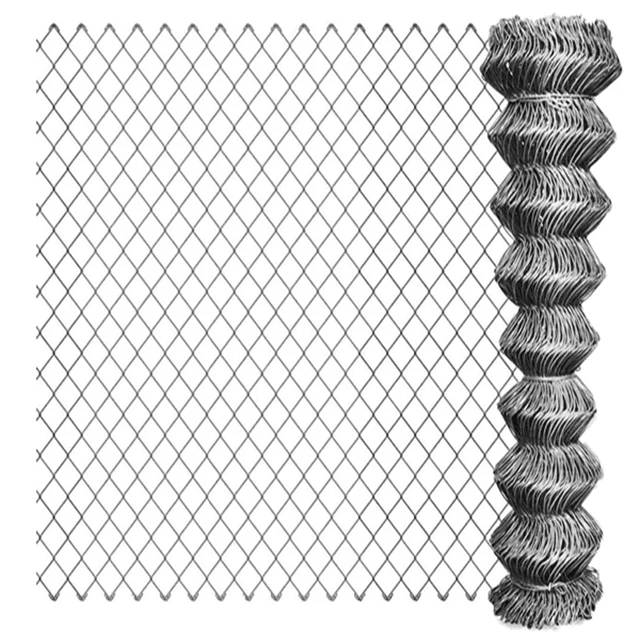
Our catalog includes galvanized chain link fence with wire diameters of approximately 1.8 mm to 3.8 mm, and PVC-coated chain link fence from approximately 2.0 mm to 3.5 mm. A common mesh opening is 50 mm x 50 mm, close to a two-inch opening.
Smaller mesh openings and heavier wire generally require more steel per square foot. They may be appropriate where the fence must contain smaller animals, resist impact or provide a more secure barrier. Do not compare a 3.0 mm product with a light-gauge product only by the roll length.
Step 4: Calculate Posts and Framework
The material takeoff should identify:
- Line posts.
- Terminal or end posts.
- Corner posts.
- Gate posts.
- Top rails.
- Tension bars and bands.
- Post caps and rail ends.
- Tie wires, clamps and other fittings.
Post spacing depends on the local specification, fence height, wind exposure and engineering requirements. Rather than using one universal spacing rule, ask the installer or project engineer to confirm the post count.
For a factory order, request the post schedule as a separate line in the quotation. This makes it easier to compare a mesh-only offer with a complete fence system.
Step 5: Add Gates and Access Hardware
Gates can change the budget more than buyers expect. Record the number, width, height and type of every opening:
- Single walk gate
- Double swing gate
- Drive gate
- Wide equipment gate
- Dog kennel gate
- Custom commercial gate
Include hinges, latch sets, gate frames, drop rods and gate posts. A supplier should not assume that a wide driveway gate is equivalent to a standard pedestrian gate.
Step 6: Add Coating, Color and Finish
Galvanized chain link fence provides a silver-gray finish and is commonly used for utility, residential and commercial applications. PVC-coated chain link fence is available in black, green and other colors for projects where appearance or additional surface protection matters.
Our standard options include galvanized and PVC-coated chain link fence. All RAL colors may be discussed for custom orders, subject to production quantity and color availability. Add the coating and color to the calculator input because they affect both price and lead time.
Step 7: Add Freight and Installation
Separate these costs in your worksheet:
- Factory packing or palletization
- Delivery to the export port
- Ocean freight
- Destination port charges
- Customs brokerage
- Inland delivery to the job site
- Local installation labor
- Concrete and excavation
- Old fence removal
For projects in the United States, the destination ZIP code is important for a delivered estimate. For overseas buyers, the preferred Incoterm and destination port are equally important.
Worked Estimate: 100 Linear Feet
Consider a 100-foot residential fence with a six-foot galvanized chain link fabric, standard posts, one walk gate and level soil.
Your worksheet should include:
- 100 feet of mesh, less the gate opening if applicable
- Line posts and terminal posts
- Top rail and tension components
- One gate frame and hardware set
- Concrete for each post
- Delivery or pickup
- Installation labor
The important point is not the final number from an online calculator. It is the completeness of the input. A calculation that omits posts, concrete or the gate is not a realistic project budget.
Worked Estimate: 200 Linear Feet
A 200-foot commercial perimeter may use a heavier wire diameter, top rail, tension wire and a double gate. Break the project into straight runs and corners, then count terminal and gate posts.
For this type of project, ask for two prices:
- Complete material package, delivered to the job site.
- Material plus local installation.
This allows the buyer to compare a factory or distributor offer with a contractor installation quote without mixing scopes.
Worked Estimate: 500 Linear Feet
A 500-foot project should be quoted from an engineered or contractor-prepared takeoff. The buyer may require multiple rolls, several gate openings, planned container loading and a complete accessory package.
For an imported order, also request:
- Number of rolls and pallets
- Gross and net weight
- Cubic volume
- Container loading plan
- Spare fittings
- Production lead time
- Inspection timing
- Shipping documents
Our team can review the dimensions and prepare a packing plan designed to use container space efficiently.
Build a Better RFQ Before You Ask for Price
Send the supplier these details:
- Product: galvanized or PVC-coated chain link fence
- Fence height
- Total linear feet
- Roll length
- Mesh opening
- Wire diameter or gauge
- Selvage: knuckle-knuckle, twist-twist or twist-knuckle
- Color
- Post type and dimensions
- Top rail requirement
- Number and size of gates
- Accessories required
- Destination ZIP code or port
- Packaging requirement
- Required delivery date
The more complete the request, the less likely you are to receive a price that must be revised later.
Material-Only, FOB and Installed Estimates
Use the following definitions when building a comparison sheet:
| Estimate type | Best for | Typical inclusions |
|---|---|---|
| Material only | DIY buyers and local contractors | Fence components only |
| FOB factory | Importers and distributors | Goods prepared for export shipment |
| CIF port | Buyers budgeting to a named port | Goods, freight and insurance to port, subject to quote scope |
| Delivered material | Project buyers | Material delivered to a named location |
| Installed price | Property owners | Material, labor and site work, subject to contractor scope |
Always ask what is excluded. An apparently low price may omit gates, terminal posts, freight or concrete.
Common Calculator Mistakes
Mistake 1: Using area instead of linear feet
Chain link fence is usually quoted by linear foot. The enclosed area is useful for planning but does not determine the amount of fence fabric.
Mistake 2: Forgetting gate posts
Gate posts may need to be stronger than line posts. Include them as separate components.
Mistake 3: Mixing gauge and millimeters
Ask the supplier to confirm the actual wire diameter. Gauge labels can be interpreted differently across markets.
Mistake 4: Omitting coating details
“Green chain link” is not a complete specification. State whether the product is galvanized, PVC-coated or another finish.
Mistake 5: Ignoring delivery terms
FOB, CIF, delivered and installed prices cannot be compared as if they were identical.